Monday, November 18, 2013

Impressions from BuildSys 2013

The 5th ACM Workshop On Embedded Systems For Energy-Efficient Buildings (BuildSys) 2013 were hold from the 13th to 14th of November in Rome, where the two researcher Dominik Egarter and Andrea Monacchi participated in. According to the general BuildSys chair the Workshops' aims can be summarized as follows:

The entrance of La Sapienza University, Rome, where SenSys and BuildSys were held
"BuildSys is a venue for discussing new directions in the monitoring, control, and management of energy consumption in buildings, and the generation of awareness and sustainability for an efficient energy market. BuildSys brings together researchers from a multitude of disciplines with a common goal to develop energy saving strategies that can have a major impact worldwide. BuildSys 2013 follows four successful predecessors held in Berkeley, Zurich, Seattle, and Toronto."

This year the workshop had 7 different season such as:
  • Energy Efficiency in Homes,
  • Data Analysis,
  • Occupancy Detection, Monitoring & Use,
  • Sensing for Energy,
  • Energy and Water,
  • HVAC, Modeling and Control and
  • Thermal Comfort Management,
Andrea and Dominik at their posters 
where in total 22 papers were presented. In addition to the general paper presentation, the workshop offers a poster and demo session, where 10 posters and 8 demos were presented. The Smart Grid Group not only visited workshop, Dominik and Andrea were presenting two posters. Dominik showed his current result of Non-Intrusive Load Monitoring (NILM) techniques with the title Appliance State Estimation Based on Particle Filtering. In this paper he showed how it is possible to apply Particle Filtering to the problem of aggregated power loads and how beneficial this approach can be. Moreover, Andreas poster has the title Insert Coin: turning the household into a prepaid billing system and propose an approach for raising energy awareness by combining appliance-level consumption information with prepaid billing so as to turn appliances in pay-as-you-go devices.


D. Egarter, Venkata Pathuri Bhuvana, W. Elmenreich. Appliance State Estimation Based on Particle Filtering5th ACM Workshop on Embedded Systems For Energy-Efficient Buildings, Rome, Italy, 2013.


A. Monacchi, W. Elmenreich. Insert Coin: turning the household into a prepaid billing system,5th ACM Workshop on Embedded Systems For Energy-Efficient Buildings (BuildSys'13), Rome, Italy, 2013


Thursday, November 7, 2013

Appliance State Estimation based on Particle Filtering


The load disaggregation problem
Dominik Egarter will present his work on Appliance State Estimation based on Particle Filtering at  the 5th ACM Workshop on Embedded Systems for Energy-Efficient Buildings (BuildSys'13) which will take place in Rome, Italy at 13th and 14th October 2013.

Non-Intrusive Load Monitoring is a single-point metering approach to identify and to monitor household appliances according their appliance power characteristics. In this paper, we propose an unsupervised classification approach for appliance state estimation of on/off-appliances modeled by a Hidden Markov Model (HMM). To estimate the states of appliances, we use the sequential Monte Carlo or Particle Filtering (PF) method. The proposed algorithm is tested with MATLAB simulations and is evaluated according to correctly or incorrectly detected on/off events.
On other approaches for solving the NILM problem, see:

Particle filter method
Read more about the approach in:

D. Egarter, Venkata Pathuri Bhuvana, W. Elmenreich. Appliance State Estimation Based on Particle Filtering, 5th ACM Workshop on Embedded Systems For Energy-Efficient Buildings, Rome, Italy, 2013.

On other approaches for solving the NILM problem, see:

D. Egarter and W. Elmenreich. EvoNILM - Evolutionary appliance detection for miscellaneous household appliances. In Proceedings of the Green and Efficient Energy Applications of Genetic and Evolutionary Computation at the 2013 Genetic and Evolutionary Computation Conference (GECCO 2013 GreenGEC). ACM, July 2013.

D. Egarter, A. Sobe, and W. Elmenreich. Evolving non-intrusive load monitoring. In Proceedings of the 15th European Conference on the Applications of Evolutionary and bio-inspired Computation, pages 182–191, Vienna, Austria, April 2013.

Friday, October 18, 2013

Strategies for domestic energy conservation in Carinthia and Friuli-Venezia Giulia

A recent study carried out by Ernst & Young on the behalf of the German Federal Ministry of Economics analyzed benefits and costs of smart metering in the country and concluded that the savings for the residential customers do not justify the costs. Therefore, a less precipitous replacement of existing meters should be arranged, which would place German utilities in conflict with the EU's target of 80% of consumers equipped with smart meters by 2020.

In the MONERGY project, we aim at providing ICT solutions to promote energy awareness and conservation, in order to lower wastages and costs, and thus CO2 emissions. In particular, we are committed to propose specific strategies considering the peculiarities of two regions under experiment: Carinthia (Austria) and Friuli-Venezia Giulia (Italy). Our initial decision was therefore to conduct an analysis of typical scenarios in the regions, in terms of electrical devices used, availability of smart metering and adaptive tariff plans, exploitation of renewable energy generation. Results of this study are presented in the paper "Strategies for domestic energy conservation in Carinthia and Friuli-Venezia Giulia", which is to be presented next November 12th at the EnergieInformatik conference, in Vienna. Beside spotting similarities and differences in the regions, we also provide a short survey on existing conservation strategies that could be implemented to our purposes.


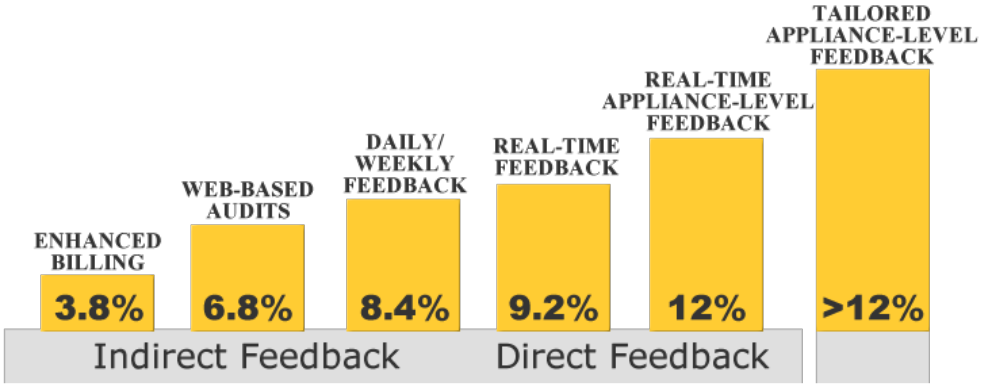
A simple conservation strategy improving energy awareness is prepaid billing. The user can buy a certain amount of energy in advance, and get his credit decreased upon consumption, and until it reaches zero, which causes a disconnection from the grid. This simple mechanism was shown leading to up to 11% of savings for the customers in UK.
From the survey it turned out that the highest savings can be achieved by employing persuasive interfaces, i.e. interactive computing systems displaying enhanced consumption information in order to promote behavioural change. In particular, appliance-level consumption information, both indirect and real-time can boost user's energy awareness, while self-learning mechanisms can be triggered by analytics and recommendations. We therefore decided to implement a prepaid billing system charging individual electrical appliances upon occurrence of consumption events. The system is currently based on the open hardware metering platform called OpenEnergyMonitor. Basically, consumption information is collected down to individual monitored devices by means of current transformers, enhanced with situational information such as time and duration, and sent to a cloud-based web service which manages the user's credit. An Android app was implemented to manage the credit and to provide the user with a smart notification system, which alerts him upon specific events (e.g. credit is over).


We believe that this system can increase the resolution of the consumption feedback and boost energy awareness of users in Carinthia and Friuli, being already applicable in spite of the differences previously spotted. We are currently planning to assess the acceptance of the system and the deriving savings within a case study in actual households in the regions. The strategy will be discussed in the poster session of the next ACM Workshop on Embedded Systems for Energy-Efficient Buildings (BuildSys'13), specifically in "Insert coin: turning the household into a prepaid billing system". We are very much looking forward to getting your comments on our ongoing research. 
In case you are interested in getting further information, an extensive overview of the project is provided by our first deliverable and the project website.
on Embedded Systems for Energy-Efficient Buildings (BuildSys’13) - See more at: http://www.monergy-project.eu/publications/#sthash.7rzhebIn.dpuf

Monday, September 9, 2013

Open Professorship on Sustainable Energy Management

Alpen-Adria-Universität Klagenfurt invites applications for a Full Professorship on
Sustainable Energy Management
prospectively to be filled by January 1, 2014.

The professorship is limited according to §99 UG to a duration of 5 years. After that duration, it is planned to establish a tenured professorship on Sustainable Energy Management.
The successful candidate has an international reputation in research on business economics and energy management, experience in the management of projects and interest in setting up multidisciplinary projects together with industry and research institutions. Furthermore, candidates should be committed to excellence in undergraduate/graduate teaching and in supervising PhD students. Candidates are expected to have good language skills in English and German.

With more than 10000 students, the Alpen-Adria-Universität Klagenfurt is a vibrant and innovative university in the southern part of Austria, a region with top quality living conditions at the confluence of Alpine and Mediterranean culture. The position is located at the Faculty of Management and Economics

In order to increase the number of women in leading academic positions, we specifically encourage women to apply.

Applications should be sent by September 18, 2013 to Sabine Tomicich (sabine.tomicich@aau.at) and should be accompanied by a descriptive summary of at most 5 pages. The complete call for applications (in German) can be found at https://energy.aau.at/wordpress/?p=72.
For more details contact Univ.-Prof. DI. Dr. Erich Schwarz (Tel.: +43 463/2700-4050 or erich.schwarz@aau.at).

Thursday, August 29, 2013

PhD position at ETH Zurich on Public Acceptance of Energy Infrastructures


The newly formed Human-Environment Systems (HES) group at ETH Zürich seeks to hire a PhD student, commencing as soon as possible, for a period of up to three years. Our group is part of the Institute for Environmental Decisions, within the Department for Environmental Systems Science. The student would pursue research within the thematic area of energy, development and security (HES:EDS) in an externally funded research project.

ETH Zürich (Foto: Roland zh, CC)
The HES:EDS thematic area concerns social and governance challenges and risks of a transition to a very large electricity system with high shares of renewables, spanning all of Europe, and possibly North Africa and the Middle East. Issues we are investigating include:

• the social acceptance of devoting large land areas to renewable power generation, centralized and decentralized, and transmission in one’s own back yard and in far off places;
• the methods and tools to involve stakeholders in the processes concerning electricity infrastructures and generation facilities, and the governance options to resolve competing interests for scarce resources, primarily land and water;
• the social and political implications of a system transformation, in particular energy security and human development impacts of cooperation between industrialised and developing regions, and ways of arriving at improved outcomes;
• the financing, construction and maintenance of an integrated power system across disparate and changing political and regulatory systems.

The successful applicant will have the opportunity to contribute to research within all research lines of the HES-EDS group, but in particular within the area of social acceptance of electricity transmission lines. Funding for this work comes from a new, European Commission-funded research project: INSPIRE-Grid (“Improved and eNhanced Stakeholders Participation In Reinforcement of Electricity Grid”), and the successful application will work with other project members in completing the research tasks already specified. The overall aim of this project is to provide the evidence base to support improvements to the permission processes for new electricity transmission lines in Europe, and in so doing improve the feasibility of renewable power options. The research tasks to be undertaken at ETH Zürich include analysing existing practices in different national contexts including different stakeholders’ needs and concern. The focus will be on why people oppose or support electricity grid projects, and what possible changes in the permission processes for such projects could accomplish.

Qualifications and skills: We seek a person with some degree of background knowledge on energy systems, gained through study or work experience, who is interested in focusing on social science research questions involving quantitative and qualitative methods, leading to a continuing career in research. Suitable candidates will hold a master’s degree in a relevant social science (e.g. political science, sociology, economics) or interdisciplinary field (e.g. environmental studies, geography, public policy). Excellent command of oral and written English, and willingness to actively engage with new concepts and methods in an interdisciplinary and international team are essential requirements. Proficiency in German, French, or Arabic would be an advantage, but is not a requirement. Prior work or research experience in risk communication processes would also be an advantage.

Position: We intend the position to be the context within which the successful candidate will complete a PhD degree. This will entail a limited amount of coursework, the preparation of a self-motivated research plan consistent with the INSPIRE-Grid project obligations, and ultimately the writing of a number of separate research papers for publication in the peer-reviewed scientific literature. Depending on the candidate’s past course transcripts, the ETH Zürich doctoral program office may also require the successful applicant to pass one or more entrance examinations within the first year. PhD students at ETH Zürich also typically engage in some undergraduate teaching, participate in workshops and seminars, and take on limited administrative duties.

The position will start as soon as possible, and is intended to be for a period of three years, within which time the successful candidate will fulfil project commitments and complete a PhD. The initial contract will be for a period of one year, with a transparent review process to determine annual renewal.

The working location will be Zürich, Switzerland, with some work-related travel within and potentially outside of Europe. All members of the HES group contribute to and benefit from a dynamic, friendly, and supportive work environment, where they have the opportunity to pursue independent and self-motivated scholarship at the same time as they benefit from close collaboration with more senior colleagues, as well as a wide international network. We have a policy of supporting all HES group members in their professional development, including attending academic conferences and workshops, and assistance in preparing for their next professional step. ETH Zürich consistently ranks among the top universities in the world, while the city of Zürich is one of the most liveable. Salaries and benefits are extremely competitive, and compensate for the high cost of living in Switzerland.

Application process: To apply, please submit a written application as an email attachment to Anthony Patt, whose contact information may be found on the HES website: www.hes.ethz.ch<http://www.hes.ethz.ch/> . Please include the words “PhD Student Application” in the email header. The application, in English, will consist of: (a) a cover letter, in which you describe your background, interest in the position, and interest in pursuing a PhD degree at ETH Zürich; (b) a resume or curriculum vitae, including past education, qualifications, work experience, and any publications; (c) scanned copies of university grades or transcripts at the bachelor and masters levels, with any additional information needed to interpret that information; (d) the names, affiliation, and contact information (telephone and email address) of two references who would be willing to discuss your qualifications. If you wish to submit a sample of written work, please feel free to do so.

You will receive a confirmation of receipt within several days. On 12 September 2013 the team members involved in the INSPIRE-Grid project (Anna Scolobig, Anthony Patt, and Johan Lilliestam) will review all applications received by then, and will continue to review new applications until the position is filled. Following the initial review, we will schedule telephone interviews with a short list of candidates, and may invite one or more candidates for an interview in Zürich. We will notify all unsuccessful candidates as soon as we have reached an agreement with the successful candidate. It is our intention to make a decision as quickly as possible after having received an excellent application from a suitable candidate. We welcome international applications, and applications from women, disabled people, and historically disadvantaged minority groups.

NOTE: DO NOT submit applications to the email address energy@env.ethz.ch<mailto:energy@env.ethz.ch>. Instead, use the address for Prof. Anthony Patt found on http://www.hes.ethz.ch

Friday, August 16, 2013

Final two Interns@SmartGrid_Group

For the last two months we had further two interns working at our institute. We report a short interview about their work and experiences at our research group.

What's your name?
Julia
What are you studying?
I am studying electrical engineering and industrial electronics at the HTL Mössingerstraße in Klagenfurt and this year I've finished the 4th class.
What are your expectations for the future?
I want to conclude the HTL with good marks, then I would like to study something that combines electrical engineering and economics.
What are you working on?
LabView GUI
I have worked on a LabVIEW measurement program for a photovoltaic system and have also created a consumer box for the lab, where we want to simulate a household. I have installed input modules, which are used for measuring voltage and current, and an output module, which is used for turning the devices on and off. These modules are implemented into my LabView program and further I have created an interface, where the user is able to input data to the program and view power and current consumption. There is also the possibility to read the measured data and control the devices through a web service in the network. I have also installed the hardware elements in the cabinet, created the wiring plan and ordered appliances. The aim of the program is to be used as a control of consumer devices like a refrigerator, water heater and radiator, which are turned on at the time, when the current price is on the lowest peak. Thus this could be an innovative application for saving costs and has to be researched.
Laboratory Installations
What did you like of the project
I liked about my work that I had the chance to contribute my own ideas and expand my programming skills in LabVIEW. It was a very varied project and I liked the mix of manual work and logical thinking.


What's your name?
Johannes
What are you studying?
I'm studying electronics and technical informatics at the HTL Mössingerstraße in Klagenfurt. I have finished my second year.
What are you expectations for the future?
After finishing the HTL, I want to study computer science.
What are you working on?
I was working on Java classes for a Smart Grid Simulator which make it possible to use algorithms from the GridLAB-D simulator. To submit this, I converted all data stored by objects from the Smart Grid Simulator into a file which is then used by GridLAB-D. The output files made by GridLAB-D are read and the values are assigned to the proper object.
OpenEnergyMonitor
GridLAB-D to Smart Grid Simulator 
I was also working on an open source energy monitor made by Openenerymonitor. My task was to enable it to change the refresh rate on the transmitter (emonTX) by using buttons on the receiver (emonGLCD). The difficult thing was to send and receive data at a time using the same transceiver.
Power Profile Generation in Java
My final project was the implementation of a Java program, which generates random power profiles of different appliances out of a given database, place this random profiles randomly in time and finally, tries to detect which appliance was used or not. The technique of appliance detection is called Non-Intrusive Load monitoring and enjoys currently an great interest in research.
What did you like of the project?
I like programming a lot. So I had the opportunity to improve my skills.


Tuesday, August 6, 2013

Smart Grid @ GECCO 2013

On July 6th - 10th we attended the Genetic and Evolutionary Conference GECCO 2013 in Amsterdam. GECCO is the largest conference in field of genetic and evolutionary computation. The conference was organized by 18 different tracks like Genetic Programming, Genetic Algorithms or Real World Applications, had 35 different tutorials and hosted 13 workshops.

From the Smart Grid group, Dominik Egarter took part at the Green and Efficient Energy Applications of Genetic and Evolutionary Computation Workshop 2013, where he presented his paper EvoNILM - Evolutionary Appliance Detection for Miscellaneous Household Appliances.
In this workshop 5 different papers were presented, which topics were widely spread from power flow optimization, wind power forecasting to wind power siting.